
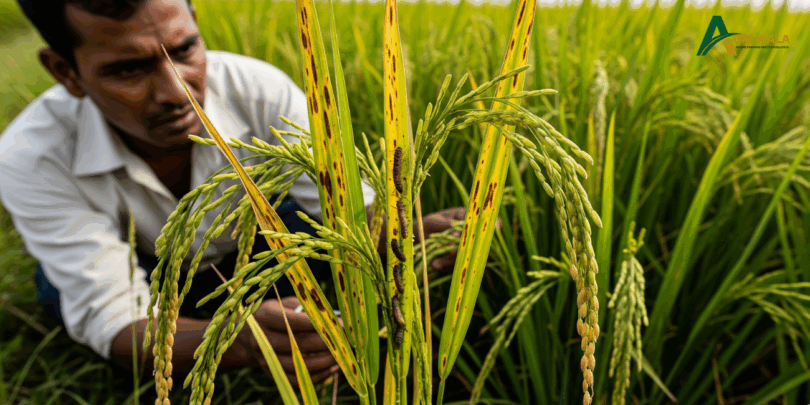
Are your paddy plants turning yellow? This common issue can be a worrying sight for any farmer. Whether you’re a seasoned grower or new to rice cultivation, noticing yellow leaves in paddy fields is a clear signal that something needs attention. Don’t panic! Understanding why your paddy plants are turning yellow is the first step toward a healthy, high-yielding crop.
Understanding Paddy Plant Yellowing: Key Causes
When your rice crop yellow leaves appear, it’s often a symptom of underlying stress. Here are the most common culprits:
1. Nitrogen Deficiency: A Key Nutrient Problem for Rice Plants
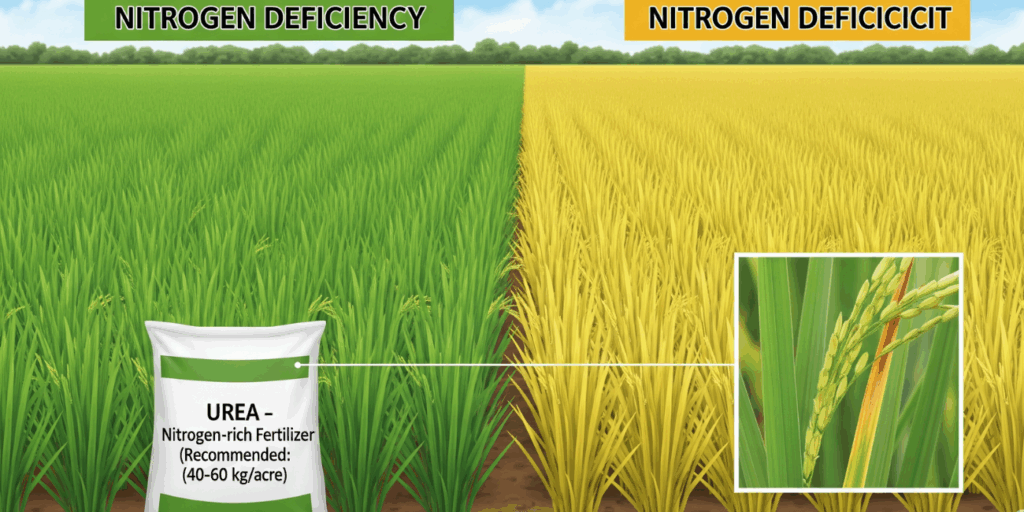
Nitrogen deficiency in rice is one of the most frequent reasons for yellowing. Nitrogen is crucial for vibrant green leaves and vigorous growth.
- Symptoms: Older leaves will show yellowing, starting from the tip and moving along the midrib.
- Solution: Apply a nitrogen-rich fertilizer like urea. A recommended dose is 40–60 kg/acre, depending on the crop stage. Splitting the application into multiple doses can improve absorption and efficiency.
2. Iron Deficiency (Chlorosis): When Young Leaves Suffer
Iron deficiency in rice plants (also known as chlorosis) is more common in acidic soils. Iron is essential for chlorophyll production.
- Symptoms: Young leaves turn pale yellow or whitish, while the veins often remain green, giving a distinct striped appearance.
- Solution: Combat this by applying ferrous sulfate (FeSO₄). This can be done as a foliar spray (0.5% solution) or directly through irrigation. Managing soil pH appropriately is also vital to ensure iron availability.
3. Excess Water or Poor Drainage: Root Suffocation
Paddy plants need water, but too much can be detrimental. Waterlogged conditions lead to root rot, which hinders the plant’s ability to absorb nutrients, resulting in yellow and weak plants.
- Symptoms: General yellowing, stunted growth, and a sickly appearance, often accompanied by foul-smelling roots.
- Solution: Improve your field’s drainage system. Implement alternate wetting and drying (AWD) irrigation practices instead of continuous flooding to give roots a chance to breathe.
4. Pest or Disease Attack: Hidden Threats
Sometimes, paddy plant disease symptoms or pest infestations are the hidden reasons behind yellowing. Diseases like Bacterial Leaf Blight (BLB) or pests such as stem borers can cause leaf discoloration.
- Symptoms: Beyond yellowing, look for other signs like lesions, spots, wilting, or visible insect damage.
- Solution: Regularly inspect your paddy plants for signs of pests or diseases. If detected, apply recommended pesticides or biological control agents. Choosing disease-resistant rice varieties can also be a proactive measure.
5. Soil Imbalance or pH Issues: Nutrient Lock-Up
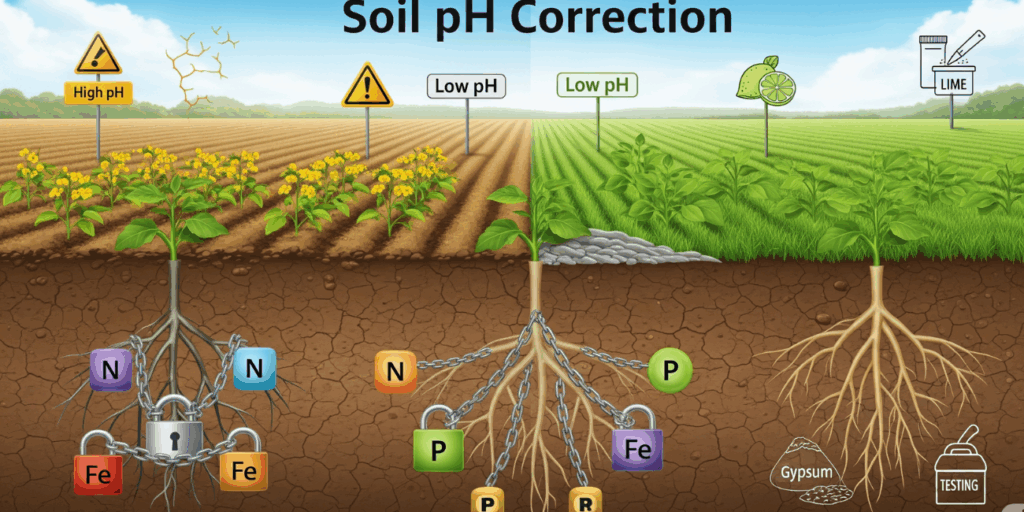
An imbalanced soil pH can significantly impact nutrient availability. If the pH is too high or too low, essential nutrients like nitrogen, phosphorus, and iron can become “locked up” and unavailable to the plant.
- Symptoms: General yellowing, stunted growth, and poor nutrient uptake.
- Solution: Get your soil tested before each planting season. Based on the results, apply lime to acidic soils to raise pH or gypsum to alkaline soils to lower pH. Using soil conditioners can also help.
How to Fix Yellowing Paddy and Prevent Future Issues
Beyond addressing the immediate problem, adopting preventive measures is key to ensuring healthy paddy plant growth and preventing future instances of rice plant leaf problem.
- Regular Soil Testing: Conduct soil tests before each crop cycle to understand nutrient levels and pH.
- Balanced Fertilization: Use balanced fertilizers that provide not only NPK but also essential micronutrients.
- Optimize Irrigation: Implement proper irrigation scheduling, such as AWD, to avoid both water stress and waterlogging.
- Crop Rotation: Rotate your crops to break disease cycles and improve soil health.
- Resistant Varieties: Opt for disease-resistant or improved rice varieties suited to your local conditions.
Safeguarding Your Paddy Yield
Yellowing of paddy plants is more than just a cosmetic concern; it can severely impact your yield and, consequently, your income. Early diagnosis and swift intervention are crucial to restoring crop health and maximizing production. By understanding the common causes and implementing effective solutions and preventive measures, you can ensure a thriving paddy crop. For the best results, always integrate comprehensive crop and nutrient management practices.
More Links –

Leave a Comment